Terug naar overzicht
COC Netherlands, Pan Africa ILGA, and ILGA Asia launched a new guide in June 2025:
“Allyship for the Queer Movement(s): Nurturing Courageous & Difficult Conversations”
Part of the Power of Pride programme, this publication gathers stories and strategies from local partners across Asia and Africa on what meaningful allyship looks like in practice.
Around the world, LGBTQI+ rights face increasing pressure. Yet, bold and creative grassroots efforts are rising to meet these challenges – through advocacy, dialogue, and bridge-building. This guide highlights these efforts: from opening up difficult conversations to creating safer communities, even in the most polarized environments.
With insights from countries like Afghanistan, Pakistan, Rwanda, and Uganda, this guide showcases what is possible when allies step up, listen, and act.
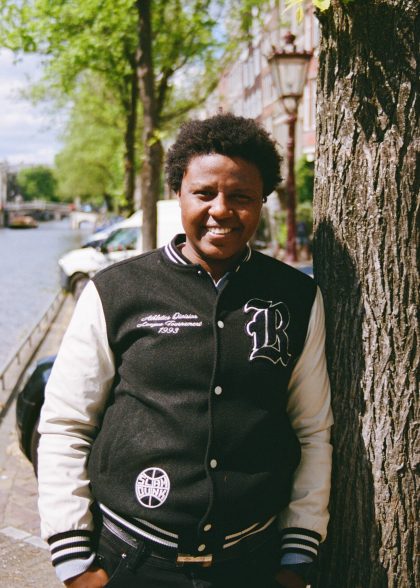
Cameroonian activist Aurélie Abanda (they/them) shares their thoughtful reflections on allyship and its crucial role in advocacy for LGBTQIA+ rights.
Why do you think allyship research is important today?
Research on allyship is important today because it provides a better understanding of the notion of ally, the place of allies in advocacy, their added value, their support in terms of relationships, the types of allies possible for a cause, the sharing of successful experiences with the involvement of allies…
Can you tell us about a time when you had an experience as an ally that deeply marked or inspired you?
I’ve experienced this moment in a number of cases, when an LGBTQIA+ -phobe is made aware of and joins the cause, and then supports us in mobilising and raising awareness among his or her peers. One example is the case of a neighbourhood chief with whom my organisation (CAMFAIDS) was in conflict, to the point where he took legal action against us for promoting homosexuality. Fortunately for us, the case did not have the outcome he was hoping for (the suspension of our organisation by the policy authorities).
Following this affair, we mobilised him to set up a network of allies called RAIL KPV (“Réseau des Acteurs d’Intervention Locale en Direction des Populations Clés et Vulnérables”). Today, thanks to all the awareness-raising and capacity-building received through this tool, this district chief in his role as local administrative authority has already managed several cases of violence and violations of the rights of LGBTQIA+ people in his area of command, without infringing the rights of LGBTQIA+ victims.
What did you learn from the research on the ally?
I have retained several aspects in the research on allyship, including:
- An ally is an essential link in the advocacy chain, and we need to support them both during periods of activity and action and during periods of inactivity.
- As part of the coaching process, an ally needs to be trained on our thematics and its main areas of concern, but also to be well informed about their role and the specific expectations placed on them.
- The family, the families of the communities mainly affected by the issues at stake, can be important allies in advocacy in the areas of social pressure for policy change.
What did you learn from participating in this ally research?
Success stories on the use and involvement of allies in causes are not sufficiently shared, and these experiences are not sufficiently shared for the purposes of capitalising on good practice.
How do you think research can have a positive impact on the LGBTQIA+ community?
This piece of research can have a positive impact on the LGBTIQIA+ community if it is widely disseminated, if the strategies and methods mentioned in it are widely taught or explained, and then applied, obviously after adaptation to each context.
And what would be the best use of it?
Its best use would be as a reference tool for capacity building in the field of advocacy and all issues related to the notion of allyship, both for allies themselves and for defenders of the rights of LGBTIQIA+ people.